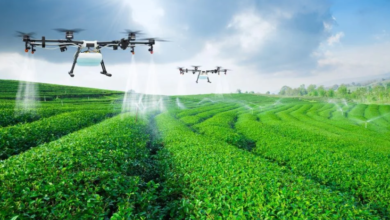
UK farming is changing at a high rate with technology taking a new shape in managing the land, monitoring of crops, and enhancing the yields. From small family farms to big farming enterprises, new agricultural drones are assisting farmers to make more intelligent, data-driven choices as well as save time, expenses, and environmental footprint.
What Are Agricultural Drones?
The unmanned aerial systems have been developed to be used in farming as well as land management. They are fitted with sophisticated sensors along with high-quality cameras that record detailed aerial data that could not have been easily or time-consuming to gather on the ground.
1. How They Support Modern Farming
Drones are used to survey the fields to check the health of crops, the state of soil, and detect any irrigation problems in time. This renders the role of agricultural drones as a necessity in the UK in terms of precision farming approach.
See also: Smart Ways to Strengthen Home Security in Chislehurst
2. Types of Drones Used in Agriculture
Owning the models of large areas based on fixed wings and multirotors depending on the needs in specific target inspections, farmers may select the platform according to the size of their farm. Several experts find the query to precision agriculture drones UK to help to analyse fields correctly.
Key Benefits of Using Agricultural Drones
The benefits of drone technology are quantifiable and they enhance productivity and sustainability.
1. Improved Crop Monitoring
The good quality images enable the farmers to identify the diseases, pest infestation, and deficiency of nutrients before they lead to large scale issues. This early intervention is a time and cost saving measure.
2. Increased Efficiency and Cost Savings
The large areas can be surveyed within minutes which saves labour and operational costs. The use of crop monitoring drones for farming is a popular activity among many farms because it optimises operations along with minimising manual inspection.
3. Data-Driven Decision Making
The obtained data may be analysed to influence the application of fertilisers, and irrigation systems, in addition to harvesting strategies, resulting in increased yields and minimised wastes.
Common Applications of Agricultural Drones
Their versatility makes them suitable for a wide range of farming tasks.
1. Field Mapping and Surveying
Proper aerial maps are used in land planning, drainage evaluation and crop rotation strategies.
2. Spraying and Seeding Support
Certain types of drones help to do the spraying and seeding of the land more precisely, which eliminates the use of chemicals and provides uniformity. This has created a demand on farm spraying drones UK to be selected in specific areas.
3. Livestock and Infrastructure Monitoring
Besides crop inspection, the drones can be used to monitor livestock movement, fencing, as well as remote infrastructure to increase the overall control of the farms.
Conclusion
The use of agricultural drones is redefining the way the farmers in the UK monitor their crops, and manage the land, in addition to enhancing productivity. They help to sustain farming activities and growth in the long run by reporting the correct data and real-time information.
To explore reliable agricultural drone solutions tailored to UK farming needs, connect with Drone Sales today as well as take the next step toward smarter, more efficient farming.
FAQs
1. Are agricultural drones legal to use in the UK?
Yes, they are legitimate provided that they are run according to the laws of CAA and licensing.
2. What types of farms benefit most from drones?
Both large as well as small farms gain, particularly those that are specialised in crop surveillance along with land administration.
3. Do agricultural drones reduce farming costs?
Yes, they help lower labour, chemical, and inspection costs through efficient data collection.
4. Is special training required to operate farming drones?
Yes, operators should be properly certified along with training in order to correspond with the UK regulations.
5. Can drones be used for livestock monitoring?
Absolutely. They are normally used to monitor livestock as well as to inspect farm infrastructure.