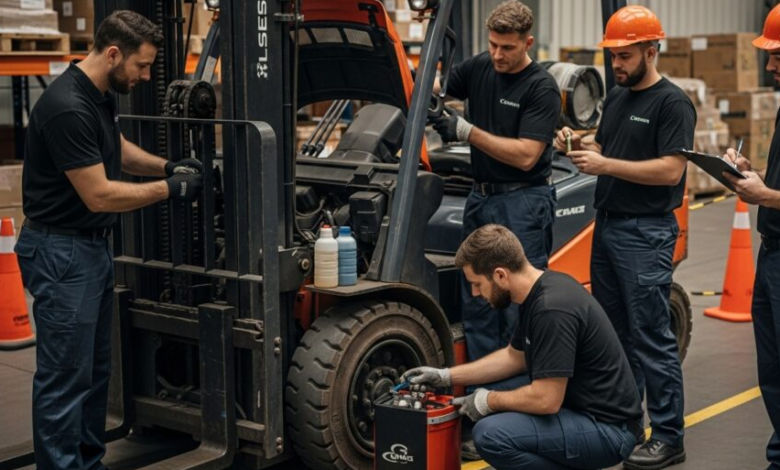
The best performance of industrial equipment can be achieved only when it is supported by consistent care and proper handling. With heavy reliance on lifting and loading, businesses find out very quickly that dependable machinery is an important asset in daily workflow. Machines can only work for a few weeks at full capacity before the signs of strain begin to show; therefore, forklift maintenance is a necessary practice if the businesses want to avoid setbacks that may be costly. Early incorporation of structured servicing helps in preventing sudden failures and ensures much safer day-to-day operations.
Why Regular Forklift Maintenance is Important
Routine checks offer avenues through which potential issues can be noticed before they become major ones. This forklift routine service checklist helps the operators and technicians monitor important components and their wear patterns to ensure that the machine remains safe for intended tasks. Such a structured approach greatly reduces unplanned downtime while raising the level of accuracy in load handling, hence enhancing the general working efficiency in warehouses and industrial areas.
Performance, Efficiency, and Life Span Improvement
The well-maintained forklift uses less fuel or battery power since it is doing the work without strain. Indeed, with preventive care for forklifts, one can get longer engine life, stable lifting performance, and reduced wear of key components. Proper lubrication, clean filters, and timely fluid changes are perfect support for efficient and safer working conditions.
See also: Find The Best Business Software And Services For Small Businesses
Key Components to Check during Forklift Maintenance
● Hydraulic System Checks
The system of lifting and lowering in regular material handling is powered by hydraulics. Neglecting a small leak eventually causes very expensive repairs later on. Keeping tight seals with clean hydraulic oil and responsive controls is one of the cost-effective means of forklift maintenance that protects long-term performance.
● Tyre, Brake, and Steering System
Tyres are usually subjected to adverse floor conditions and heavy loads. Monitoring for tread depth, cracks, and inflation prevents uneven movement or sudden failure. Brakes and steering have to be responsive due to the tight areas in most storage areas. Precision and stability ensure safety in such cases.
● Battery Care and Engine Health
Like all other electric forklifts, these require thorough maintenance of the battery including checking of water level, cleaning of terminals, and good charging practice. Diesel and LPG models need oil changes regularly, coolant checks, and cleaning of air filters. Understanding how to extend forklift engine life will enable these teams to maintain consistent performance of their machines, avoiding major breakdowns that may involve the engines.
Conclusion
A reliable forklift is one that’s regularly serviced, with operators knowing exactly what they are doing and a generally proactive attitude toward good mechanical health. Should repairs be needed, calling in expertise that comprehend the intricacies of complex systems means negligible downtime with assured results. Here at Forklifts4u, qualified and experienced engineers give a fast and efficient response for repairs to forklifts throughout West Midlands and Staffordshire. They do this to ensure that your business keeps running with the least delay possible.
FAQs
What is the service frequency of a forklift?
Normally, this is every 250 hours of use, but in high-usage environments, this checking is required more often.
What are the possible hazards if maintenance is not done?
Neglecting to follow a routine maintenance schedule results in breakdowns and perhaps a safety hazard.
Why is preventive maintenance important?
It will prevent small issues from growing into major failures, improving equipment longevity.
What does a forklift indicate when it needs servicing?
Fluid leaks, hard steering, slower than normal lifting, unusual noises and excessive vibration.
Do electric forklifts require less maintenance?
Less mechanical service is required, but they have rigid battery and electrical maintenance requirements.